

Send Message
Privacy statement: Your privacy is very important to Us. Our company promises not to disclose your personal information to any external company with out your explicit permission.

EN


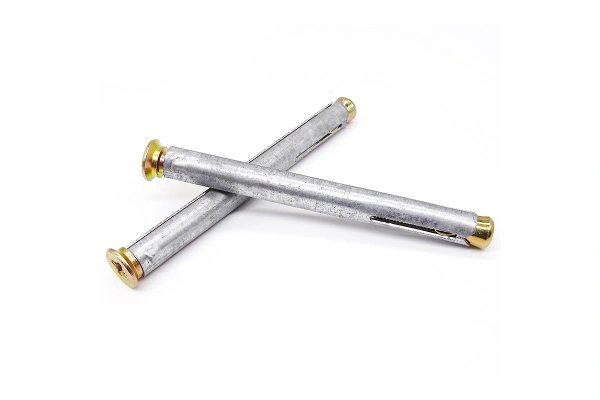
A Fischer anchor bolt is a specialized mechanical fastener engineered to secure structural components into base materials like concrete, brick, or stone. Unlike standard bolts that rely solely on friction, these anchors expand or bond within the drilled hole to create an immovable connection capable of withstanding heavy loads and dynamic forces.
In the context of solar energy infrastructure, Fischer anchor bolts serve as the critical interface between the mounting system and the ground or roof. They ensure that your photovoltaic panels remain stable against wind uplift, seismic activity, and environmental stress, protecting your capital investment over the system's lifespan.
With two factories covering 25,000 square meters, we produce 3 million units annually. This scale ensures you never face supply chain delays, even during peak industry seasons.
Located in China's "Capital of Fasteners," we leverage local industrial clusters to reduce raw material costs and shorten lead times, lowering your landed cost significantly.
Our products comply with ISO 9001, ISO 14001, and GB/T standards. We provide rigorous third-party testing to meet international engineering requirements.
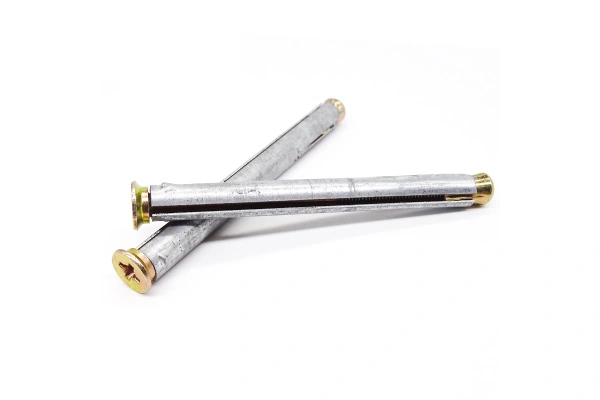
We utilize automated production lines including advanced punching machines to ensure every Fischer anchor bolt meets strict dimensional tolerances. Our process eliminates human error, ensuring consistent thread pitch and head geometry across millions of units.
We source high-grade steel (such as Q235B and Q355B) that exceeds industry average strength standards. Every batch undergoes layer-by-layer inspection from raw material intake to finished product packaging.
To ensure longevity in harsh environments, our anchor bolts feature hot-dip galvanization exceeding 85μm in thickness. This protects against rust and corrosion, extending the service life of your installation by decades.
The primary factor in selecting a Fischer anchor bolt is the load it must bear. For solar mounting systems, you must calculate both static loads (weight of panels) and dynamic loads (wind and snow). Choosing a bolt with insufficient pull-out strength risks structural failure.
Not all anchors work for all materials. Concrete requires different expansion mechanisms than hollow brick or steel. Our technical team helps you match the specific anchor type—such as wedge anchors or sleeve anchors—to your substrate for maximum holding power.
Is the installation coastal? In high-humidity regions? Standard carbon steel will rust quickly. We recommend specifying high-grade stainless steel or enhanced galvanized Fischer anchor bolts for corrosive environments to avoid premature replacement costs.
Verified Certifications: Does the supplier provide valid ISO and CE reports?
Stable Lead Times: Can they deliver within 15-20 days for bulk orders?
Customization Capability: Do they offer OEM services for unique project needs?
After-Sales Support: Is there a clear warranty and technical support policy?
Factory Audits: Have you verified their production capacity and equipment?
Cost Efficiency: Does the price include competitive shipping terms?
Avoid trading companies when sourcing Fischer anchor bolts. Partner with manufacturers who own their factories, like SJCT, to ensure direct communication, better pricing, and full control over quality assurance.
The best suppliers employ professional engineers who can advise on installation techniques and load calculations. A supplier with a dedicated R&D team demonstrates long-term commitment to product innovation and reliability.
Choose a supplier with a proven track record in international markets. SJCT exports to Europe, Asia, and Africa, meaning they understand diverse regulatory requirements and shipping logistics.
Fischer anchor bolts are essential for securing ground-mount and rooftop solar arrays. They provide the necessary tensile strength to resist wind uplift and ensure panel stability for 25+ years.
Used in steel structure buildings, bridges, and high-rise facades. Their ability to handle heavy shear loads makes them ideal for connecting structural beams and columns.
From highway noise barriers to subway tunnels, these anchors provide reliable fixation in concrete foundations, ensuring public safety and infrastructure durability.
Corrosion typically occurs when the protective coating (like zinc plating) is damaged during installation or when low-quality materials are used in highly acidic or saline environments. Using hot-dip galvanized bolts with thick coatings mitigates this risk.
Failure is often due to incorrect drilling depth, debris in the hole, or using the wrong anchor type for the base material. Proper installation procedures and pre-installation site surveys are crucial to prevent structural failure.
High-quality bolts have uniform threading, sharp markings indicating grade/material, and consistent coating thickness. Low-quality bolts often have rough surfaces, inconsistent dimensions, and thin plating that peels easily.


Privacy statement: Your privacy is very important to Us. Our company promises not to disclose your personal information to any external company with out your explicit permission.
Fill in more information so that we can get in touch with you faster
Privacy statement: Your privacy is very important to Us. Our company promises not to disclose your personal information to any external company with out your explicit permission.