


Send Message
Privacy statement: Your privacy is very important to Us. Our company promises not to disclose your personal information to any external company with out your explicit permission.
 Hebei Shijing Changtian Metal structure products Co., LTD


A chemical anchor bolt is a high-performance fastening system that combines mechanical interlock with chemical adhesion to create an ultra-strong connection in concrete and masonry substrates. Unlike traditional mechanical anchors that rely solely on friction, chemical anchors use a specialized resin mortar—typically vinyl ester, epoxy, or polyester—to bond the threaded rod to the base material.
This dual-action mechanism allows chemical anchors to achieve significantly higher load-bearing capacities than mechanical alternatives, even in cracked concrete. They are the preferred choice for heavy-duty structural applications where safety and reliability are non-negotiable.
For global procurement managers, choosing the right chemical anchor means reducing long-term maintenance risks and ensuring compliance with rigorous international building codes. The robust bond created by these anchors makes them ideal for seismic zones, high-wind environments, and critical infrastructure projects.
At Hebei Shijing Changtian Metal Structure Products Co., Ltd., quality is not just a checkpoint—it is the foundation of our brand. With over 25,000 square meters of production space across two advanced facilities, we integrate rigorous quality control into every stage of manufacturing.
Raw Material Integrity: We source only certified steel rods and premium-grade resins, ensuring consistent performance under extreme loads. Every batch undergoes strict verification against GB/T and EN standards before entering production.
Automated Precision: Our automated production lines minimize human error, delivering uniform coating thickness and precise thread geometry. This consistency is critical for buyers who require reliable torque values and pull-out strengths across large project volumes.
Certified Compliance: Our systems are certified under ISO 9001, ISO 14001, and ISO 45001, giving you confidence that your supply chain meets global environmental, safety, and quality benchmarks.
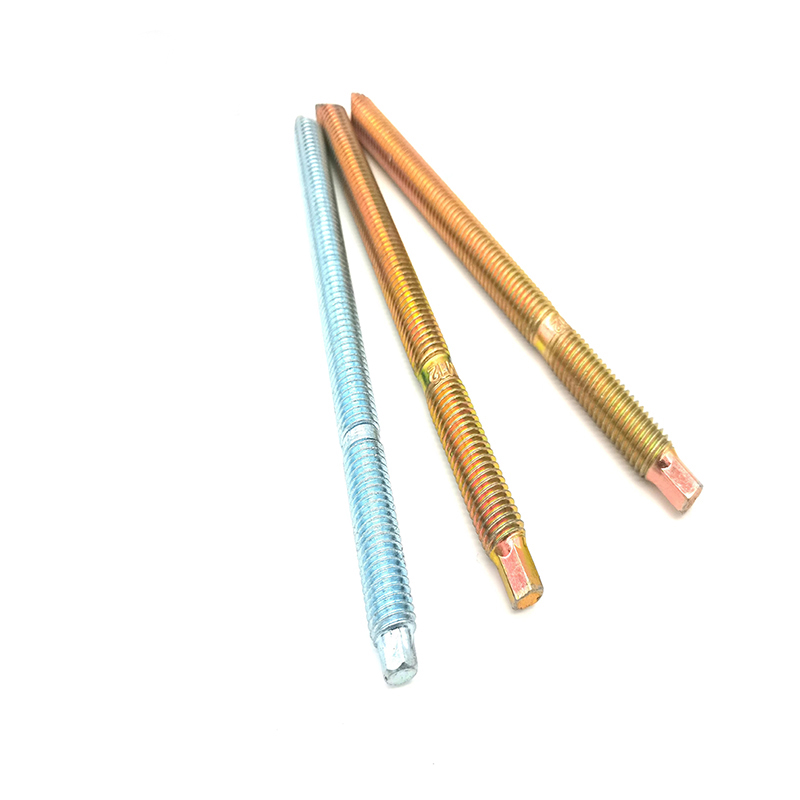
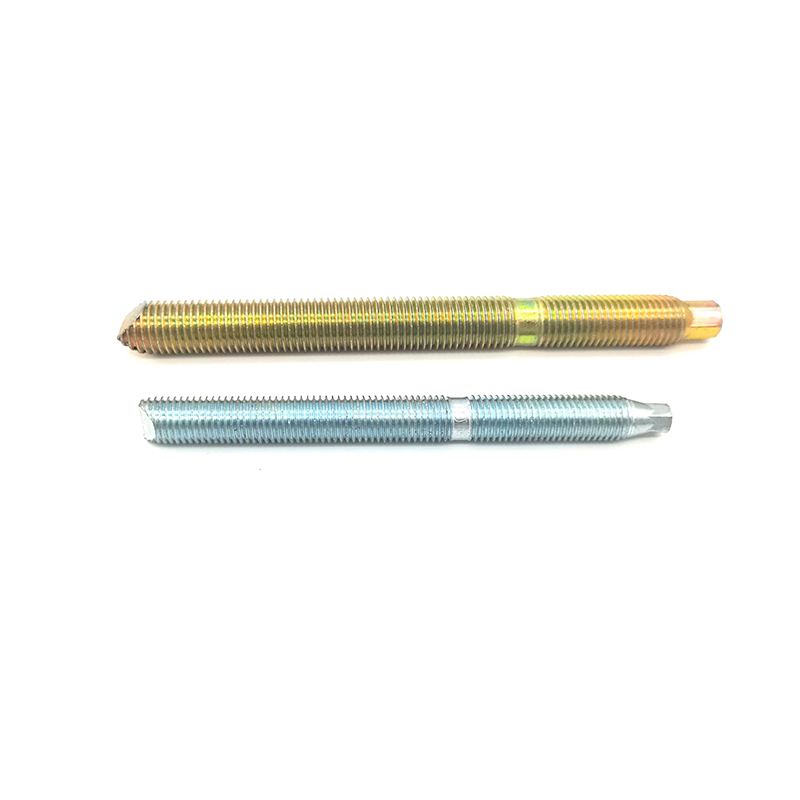
Selecting the correct chemical anchor bolt requires matching technical specifications to your project's unique demands. Here is how professional buyers evaluate options:
Ensure the anchor resin is compatible with your substrate—whether it is solid concrete, cracked concrete, or brick/masonry. Vinyl ester resins typically offer superior performance in cracked concrete and high-temperature resistance, making them ideal for demanding structural applications.
Calculate both static and dynamic loads, including seismic forces if applicable. Always apply appropriate safety factors as defined by local building codes (e.g., ETAG 001 in Europe, ICC-ES in the US). Under-specifying anchors can lead to catastrophic failure and liability issues.
Consider chemical exposure, moisture levels, and temperature fluctuations. For coastal or industrial environments, choose anchors with enhanced corrosion resistance and proven durability in aggressive conditions.
Opt for systems that simplify installation—such as glass capsule or cartridge formats—that reduce labor time and training requirements. Faster installation means lower project costs and fewer delays.
Confirm that products hold valid ETA (European Technical Approval), ICC-ES, or equivalent third-party certifications relevant to your target market.
Request comprehensive TDS documents detailing pull-out values, spacing edge distances, and fire resistance ratings for engineering validation.
Order samples for independent laboratory testing to verify performance claims before committing to bulk orders.
Evaluate supplier capacity, lead times, and logistics capabilities to ensure timely delivery for your project schedule.
Confirm availability of technical support, installation guidance, and warranty terms to mitigate post-purchase risks.
Consider not just unit price, but also installation speed, tool requirements, and long-term durability when evaluating value.
Check if the supplier can provide custom lengths, coatings, or packaging to meet specific project requirements.
Chemical anchor bolts are indispensable across diverse industries where structural integrity and safety are paramount. Their versatility allows them to perform reliably in some of the most demanding environments worldwide.
Used to secure steel columns, beams, and precast concrete elements in commercial and residential buildings. Chemical anchors provide superior performance in seismic retrofitting and new construction alike.
Critical for anchoring bridge railings, tunnel linings, and retaining walls. Their resistance to vibration and dynamic loads makes them ideal for transportation infrastructure.
Deployed in thermal, hydro, and renewable energy facilities to secure turbine foundations, generator units, and piping systems against extreme operational stresses.
Anchors large-scale industrial equipment, CNC machines, and assembly lines to concrete floors, preventing movement and ensuring precision operation.
Resists corrosive saltwater environments while providing strong holds for mooring bollards, crane rails, and dock structures in harsh marine conditions.
Secures curtain walls, exterior cladding, and heavy signage to existing concrete structures without compromising the integrity of the original building.
As a manufacturer with complete production lines—from raw material processing to final packaging—we eliminate middlemen costs and ensure consistent quality control throughout the supply chain.
With established export operations to Europe, Asia, Africa, and the Americas, we understand international standards, documentation requirements, and logistics challenges facing global buyers.
Our dedicated R&D team continuously improves product formulations and manufacturing processes, staying ahead of evolving industry standards and customer needs.
Leveraging our location in Yongnian—the "Fastener Capital of China"—we benefit from a mature industrial cluster that reduces sourcing costs and accelerates production timelines.
Mechanical anchors rely on friction and expansion within the hole to hold weight, while chemical anchors use a resin mortar to bond the rod to the substrate. Chemical anchors generally offer higher load capacities, better performance in cracked concrete, and reduced risk of substrate splitting. They are preferred for heavy-load and seismic applications.
Standard chemical anchors require dry holes for optimal bonding. However, specialized wet-setting resins are available for use in damp or submerged conditions. Always consult technical data sheets and conduct site-specific testing to ensure compatibility with your environment.
Curing times vary by resin type and ambient temperature. Vinyl ester resins typically cure within 20–40 minutes at 20°C, allowing faster installation cycles. Epoxy resins may require longer curing periods but offer excellent chemical resistance. Temperature significantly affects cure speed—higher temperatures accelerate curing, while colder conditions slow it down.
Yes, many chemical anchor systems are specifically tested and approved for seismic applications. Look for products with ETAG 001 Category approval or ICC-ES evaluation reports that confirm seismic performance. These anchors are designed to maintain integrity under dynamic and cyclic loading conditions common in earthquake-prone regions.
Anchor sizing and spacing depend on the applied load, base material strength, edge distances, and safety factors required by local codes. Our technical team can assist with engineering calculations based on your project specifications. Always refer to manufacturer-approved installation guides and consult a structural engineer for critical applications.
Key certifications include ETA (European Technical Assessment), ICC-ES (International Code Council Evaluation Service), ISO 9001 for quality management, and country-specific approvals such as DIBT (Germany) or UL (USA). These certifications verify that products meet rigorous performance and safety standards.
About Us
Related Products List
Contact Us

Privacy statement: Your privacy is very important to Us. Our company promises not to disclose your personal information to any external company with out your explicit permission.
Fill in more information so that we can get in touch with you faster
Privacy statement: Your privacy is very important to Us. Our company promises not to disclose your personal information to any external company with out your explicit permission.