

Send Message
Privacy statement: Your privacy is very important to Us. Our company promises not to disclose your personal information to any external company with out your explicit permission.

EN


An L anchor bolt is a specialized structural fastener characterized by its distinctive "L" shape, designed to embed securely into concrete foundations or attach directly to steel structures. In the context of photovoltaic (PV) installations, these bolts serve as the critical interface between the ground screw, helical pile, or mounting bracket and the underlying support structure.
For procurement managers overseeing large-scale solar farms, understanding the specific application of L anchor bolts is vital. They are not merely generic hardware; they are engineered components that transfer wind loads, snow loads, and seismic forces from the PV array into the foundation. Choosing the correct specification ensures structural integrity and prevents costly retrofits.
Hebei Shijing Changtian Metal Structure Products Co., Ltd. specializes in manufacturing high-strength L anchor bolts and related PV foundation accessories. Rooted in Yongnian, the "Capital of Fasteners in China," we leverage a mature industrial cluster to deliver products that meet rigorous international standards, ensuring your project's foundation remains stable for decades.
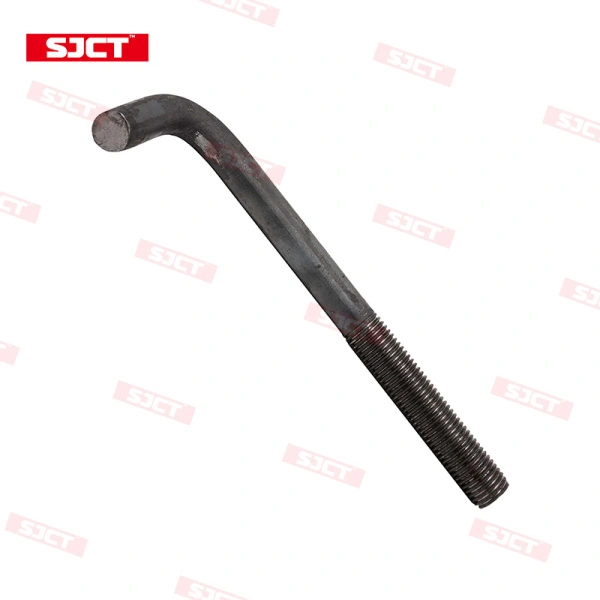
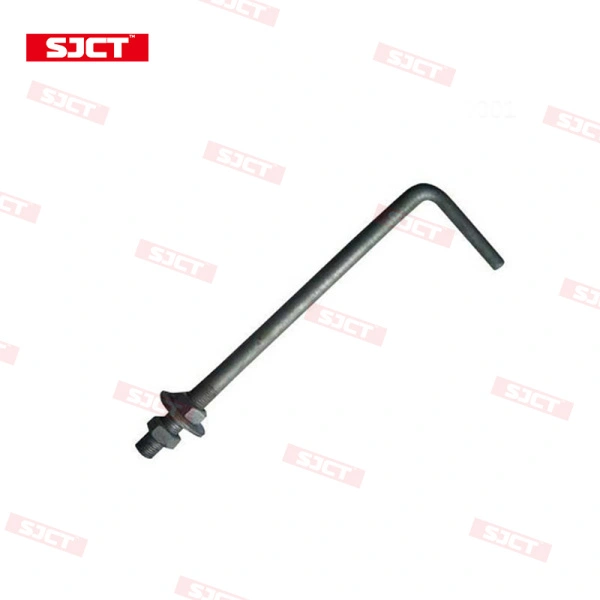
At Hebei Shijing Changtian, quality is not an afterthought—it is embedded in our manufacturing process. Our two production bases cover 25,000 square meters and are equipped with advanced automated lines that ensure precision for every L anchor bolt produced.
We use standard raw materials like Q235B and Q355B, which offer base material strength far exceeding industry averages. This ensures that each bolt can withstand the tensile and shear forces typical in PV installations.
Our hot-dip galvanizing process strictly follows GB/T 13912 standards. With a zinc layer thickness of no less than 85μm, our L anchor bolts pass salt spray tests lasting over 3,000 hours, protecting against harsh environments.
ISO 9001, ISO 14001, and ISO 45001 certified, our facility implements a full-process self-inspection mechanism. From raw material intake to finished product dispatch, every batch is verified to minimize risk and ensure consistent performance for global projects.
Selecting the appropriate L anchor bolt requires balancing technical specifications with project-specific environmental conditions. Here is a guide to making the right choice:
Calculate the wind and snow loads for your site. The bolt's diameter and thread length must correspond to the required pull-out strength. Over-specifying wastes budget; under-specifying risks safety.
For soft soils or sandy terrain, longer bolts with larger surface area may be needed. In rocky or hard soil, shorter, higher-strength variants might be more efficient. Consult our engineering team for site-specific advice.
Coastal or high-humidity sites demand superior corrosion protection. Standard hot-dip galvanization is suitable for most regions, but CX-level corrosive environments may require customized coating solutions.
Use this checklist to evaluate suppliers and ensure you receive high-quality L anchor bolts that meet your project's needs.
Procurement buyers often encounter specific issues when sourcing anchor bolts. Here are common problems and how to avoid them.
Bolts rust prematurely in outdoor environments, leading to structural weakness.
Solution: Specify hot-dip galvanized bolts with a zinc coating thickness of at least 85μm. Avoid cold galvanization for long-term PV projects.Bolts do not fit mounting brackets due to inconsistent thread pitch or length.
Solution: Work with manufacturers who use CNC automated equipment and enforce strict tolerance controls during production.Project timelines are missed due to slow production or logistics bottlenecks.
Solution: Partner with suppliers who maintain 10,000-ton level inventory support and have multiple automated production lines for rapid delivery.Buyers struggle with installation issues or cannot get custom specs approved quickly.
Solution: Choose suppliers with dedicated R&D teams and 24/7 English technical support to assist with design and installation queries.When sourcing L anchor bolts and PV foundation accessories, partnering with a reliable manufacturer reduces risk and ensures project success. Here is why global buyers choose SJCT:
Located in Yongnian, Hebei, we benefit from China's mature fastener industrial cluster. This allows us to source raw materials efficiently and keep costs low without compromising quality.
With 25,000 sqm of factory space and automated lines, we can produce millions of pieces annually. We offer "lightning delivery" to meet urgent project deadlines.
Our products are exported to 15+ countries across Europe, Asia, Africa, and the Americas. We understand international standards and certification requirements.
An L anchor bolt has one end shaped like an "L" to embed into concrete or attach to a base, providing anchoring force. A standard hex bolt is fully threaded and requires a nut and washer for assembly. L anchors are typically used for foundational support, while hex bolts are used for connecting structural components.
Yes, we offer full OEM/ODM services. You can specify the material (e.g., Q235B, Q355B), dimensions, thread type, and surface treatment (hot-dip galvanizing, stainless steel) to match your project's exact requirements.
We accommodate both small and large orders. Due to our high-volume production capacity, we can offer competitive pricing even for smaller batches, though bulk orders yield the best cost efficiency.
Absolutely. All our products come with Material Test Certificates (MTC). Our factory is ISO 9001, ISO 14001, and ISO 45001 certified. We can also assist with CE, EN1090, and ASTM certifications for European and North American markets.
We offer a 10-year warranty on the main structure of our foundation accessories, based on the durability of the hot-dip galvanizing. For extreme corrosive environments, we can negotiate extended warranties up to 15 years.


Privacy statement: Your privacy is very important to Us. Our company promises not to disclose your personal information to any external company with out your explicit permission.
Fill in more information so that we can get in touch with you faster
Privacy statement: Your privacy is very important to Us. Our company promises not to disclose your personal information to any external company with out your explicit permission.