


Send Message
Privacy statement: Your privacy is very important to Us. Our company promises not to disclose your personal information to any external company with out your explicit permission.
 Hebei Shijing Changtian Metal structure products Co., LTD


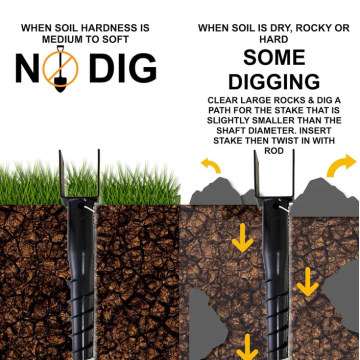


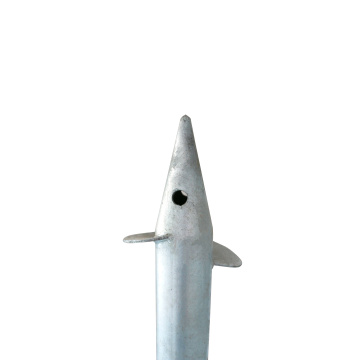
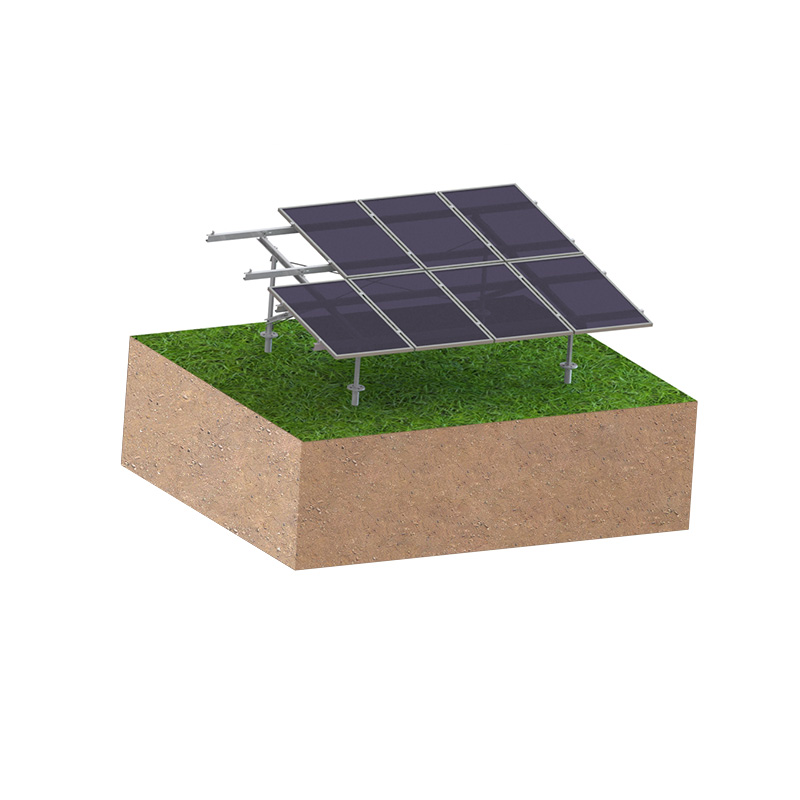
A solar farm foundation system is the critical interface between your photovoltaic array and the earth. Unlike traditional concrete foundations that require curing time and heavy excavation, modern helical ground screws provide an immediate, high-strength anchor for mounting structures.
For procurement managers, choosing the right foundation system is not just about engineering specs—it's about project timeline and total installed cost. Our helical piles offer a rapid installation method that reduces site preparation time by up to 50% compared to conventional methods, allowing you to energize your solar assets faster.
Designed for diverse geologies, from sandy soils to clay, these screw piles ensure structural integrity against wind loads and seismic activity, protecting your long-term investment in renewable energy infrastructure.
With two major production bases covering 25,000 square meters, we deliver up to 30,000 units per day. This scale ensures that large-scale solar farm projects never face supply chain delays due to manufacturing bottlenecks.
Rooted in China's "Fastener Capital," our location provides direct access to raw materials and processing clusters. This proximity significantly lowers your landed cost and allows for rapid response to custom specifications.
Our products meet rigorous international standards including GB/T 13912 for hot-dip galvanizing. We hold ISO 9001, ISO 14001, and ISO 45001 certifications, ensuring your project meets local regulatory requirements in Europe, North America, and beyond.
Our team of 10 senior engineers and 20 R&D specialists continuously optimize pile designs for specific geological conditions, ensuring maximum load-bearing capacity with minimal material usage.
We offer full customization services, adapting bolt sizes, thread pitches, and pile lengths to match your specific engineering drawings and project requirements.
Quality is the cornerstone of any successful solar farm deployment. At SJCT, our quality control system covers every stage of production, from raw material selection to final packaging.
Selecting the correct foundation components requires balancing geological data, wind load requirements, and budget constraints. Here is a professional guide for procurement teams evaluating suppliers.
Different terrains demand different pile designs. Sandy soil may require extended spiral blades for grip, while clay might need shorter, thicker piles. Ensure your supplier offers customizable geometries.
In coastal or saline-alkali environments, standard galvanization may fail prematurely. Look for suppliers offering EN-ISO-1461 compliant coatings with zinc thickness >85μm for 25+ year lifespans.
Verify that the supplier performs torque-load testing. High-strength steel (Q355B) combined with precise helix angles ensures the pile can withstand extreme wind uplift without settling.
Before finalizing a contract with a solar foundation supplier, use this checklist to mitigate risk and ensure alignment with your project goals.
When evaluating potential partners for your solar farm foundation needs, prioritize suppliers who demonstrate vertical integration, global compliance, and technical agility.
Look for manufacturers like SJCT who own their raw material processing and finishing capabilities. This vertical integration allows for tighter quality control and more competitive pricing than trading companies.
Key Indicator: Does the supplier have ISO 9001 certification and a documented quality management system? Do they offer OEM/ODM services for custom engineering?
Your supplier must have experience handling international logistics and compliance documentation. They should be able to provide EN1090 or ASTM certificates required for market access in Europe and North America.
Key Indicator: Check their export history. Have they successfully delivered to EPC contractors in your target region? Do they offer 24/7 technical support in English?
Many buyers underestimate the impact of salt spray on standard galvanized layers. Solution: Specify hot-dip galvanizing with zinc thickness >85μm and request salt spray test reports exceeding 3,000 hours.
Piles that are difficult to torque into the ground cause massive schedule slippage. Solution: Work with suppliers who design helix angles specifically for your soil type, reducing installation time to ~3 minutes per pile.
Variations in steel grade or thread dimensions between batches can compromise structural integrity. Solution: Require suppliers to use automated production lines with strict QC checkpoints at every stage.
Improper stacking can damage threads and coatings. Solution: Ensure your supplier uses standardized packaging with protective caps and secure palletizing for ocean freight.
While primarily designed for solar farms, our helical foundation systems serve a wide range of industries requiring rapid, stable ground anchoring.
The primary application. Supports mounting structures for utility-scale PV installations, enabling rapid deployment across varied terrain.
Used as foundations for small-to-medium wind turbines, providing stability against high wind loads and cyclic stress.
Ideal for prefabricated buildings, decks, and lightweight commercial structures where traditional concrete footings are too slow or expensive.
Supports transmission towers, signage, and bridge abutments, offering superior load-bearing capacity in soft soil conditions.
With proper hot-dip galvanizing (≥85μm zinc layer), helical piles can last 25-50 years. Our products come with a 10-year warranty on the main structure, ensuring reliability throughout the initial phase of your solar farm operation.
Yes. We offer full OEM/ODM services. Pile outer diameters range from 60mm to 140mm, and lengths can be customized based on your geotechnical survey data to optimize cost and performance.
We provide comprehensive packaging solutions. In the rare event of damage, we have a responsive claims process. For bulk orders, we recommend third-party inspection before shipment.
Our company holds ISO 9001, ISO 14001, and ISO 45001. Products comply with GB/T 13912 for galvanizing and can meet EN1090 and ASTM standards for European and North American markets upon request.
With an annual output of 3 million pieces and 30,000 pieces daily capacity, we can handle large-scale projects efficiently. Standard lead times are typically 15-20 days, depending on order volume and customization requirements.
Yes, we offer 24/7 technical consultation via email and video conference. For large projects, we can dispatch engineers to provide on-site guidance and training for your installation crew.
About Us
Related Products List
Contact Us

Privacy statement: Your privacy is very important to Us. Our company promises not to disclose your personal information to any external company with out your explicit permission.
Fill in more information so that we can get in touch with you faster
Privacy statement: Your privacy is very important to Us. Our company promises not to disclose your personal information to any external company with out your explicit permission.