

Send Message
Privacy statement: Your privacy is very important to Us. Our company promises not to disclose your personal information to any external company with out your explicit permission.
 Hebei Shijing Changtian Metal structure products Co., LTD
With two factories covering 25,000 square meters and automated production lines, we deliver up to 30,000 ground screws daily. This scale ensures on-time delivery for large-scale PV power station projects without supply interruptions.
Our products strictly follow GB/T 13912 standards with zinc layer thickness >85μm and salt spray test life >3000 hours. We provide ISO9001, ISO14001, and ISO45001 certified manufacturing processes to reduce your risk of corrosion failure.
From sandy soil to tidal flats, our R&D team designs specific pile diameters (60mm-140mm) and lengths to match your project's geological data. This precision engineering lowers your overall landed cost by optimizing material usage.
Hebei Shijing Changtian Metal Structure Products Co., Ltd. operates a comprehensive quality control system that spans from raw material procurement to final shipment. Our commitment to "surviving by quality and integrity" is backed by advanced testing equipment and a dedicated technical team of 20 R&D personnel and 10 senior engineers.
We utilize high-grade Q235B and Q355B steel, ensuring base material strength far exceeds industry averages. This robustness is critical for photovoltaic bracket systems that must withstand extreme wind loads over a 25-year lifespan.
Our hot-dip galvanizing process ensures a minimum zinc layer thickness of 85μm. This protective barrier provides superior resistance to harsh environments, including high humidity, saline-alkali soils, and coastal installations, significantly extending the service life of your PV foundation.
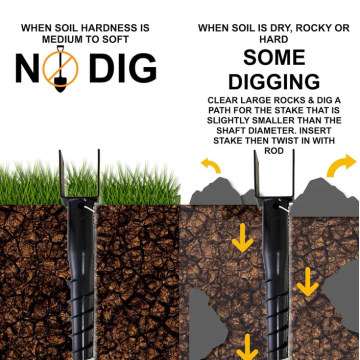
The first step in selection is analyzing site-specific soil conditions. Soft soils may require extended spiral ground screws with larger helix areas, while hard clay or rocky terrain might benefit from shorter, thicker piles. Choosing the wrong specification can lead to installation failures or excessive torque requirements.
Evaluate the wind load, snow load, and panel weight of your design. Our helical piles are engineered to meet specific bearing capacity standards, ensuring stability against uplift forces. Proper calculation prevents structural fatigue and reduces maintenance costs over the project's lifecycle.
For projects in coastal or industrial zones, standard galvanization may not suffice. Select products with enhanced anti-corrosion treatments, such as those meeting EN-ISO-1461 standards for CX-level corrosivity. This proactive choice protects your investment against premature degradation.
Consider the construction timeline. Our helical piles allow for rapid installation using hydraulic torque drivers, taking only ~3 minutes per pile. This speed reduces labor costs by up to 20% compared to traditional concrete foundations, accelerating your time-to-market.
Verify Certifications: Ensure the supplier holds ISO9001, ISO14001, and relevant product certifications like EN1090-1 for European markets.
Check Supply Capacity: Confirm the factory can handle your volume requirements (e.g., 3 million pieces annually) without compromising quality.
Assess Customization: Does the supplier offer OEM/ODM services to tailor pile dimensions to your specific engineering drawings?
Evaluate After-Sales Support: Look for suppliers offering clear warranty terms (e.g., 10-year structure warranty) and responsive technical consultation.
Review Logistics Capability: Ensure the supplier has experience in international shipping and customs clearance to avoid port delays.
Confirm Material Traceability: Request mill certificates for Q235B/Q355B steel to verify chemical composition and mechanical properties.
Large-scale infrastructure ensures consistent batch quality and bulk order fulfillment.
High throughput capability supports aggressive project timelines and rapid deployment.
Proven international track record in Europe, Asia, Africa, and the Americas.
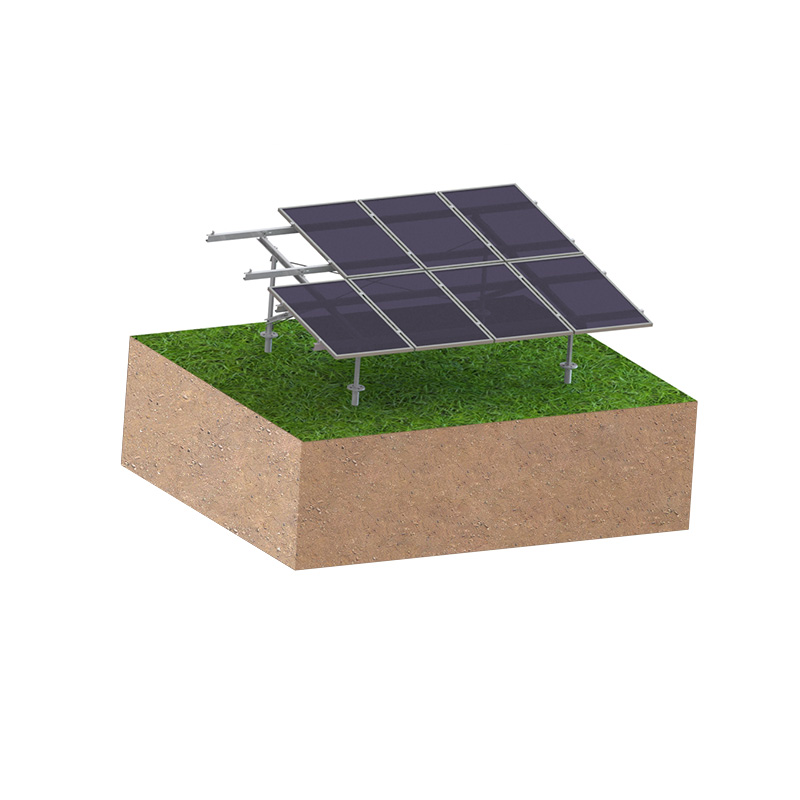
Core foundation component for wind power and photovoltaic projects. Helical piles withstand strong wind loads and ensure stable system operation in remote locations.
Used for bridge foundations, docks, and highway noise barriers. Excellent marine corrosion resistance and seismic performance make them ideal for water-crossing structures.
Foundation for residential buildings, villas, and commercial complexes. Replaces traditional concrete footings, eliminating curing time and reducing site disturbance.
Functions as the foundation for offshore platforms and oil drilling rigs. Resists huge waves and seawater erosion, providing critical stability in harsh marine environments.
Secures foundations for agricultural greenhouses, livestock facilities, and landscape pavilions. Convenient installation without damaging soil structure.
Enables rapid foundation construction for mobile homes, disaster relief sites, and temporary lighting systems. Ideal for projects requiring quick setup and dismantling.
Solution: We provide hot-dip galvanized products with verified zinc layer thickness (>85μm) and salt spray test results (>3000 hours), ensuring durability in humid or saline environments.
Solution: With 6 PV bracket production lines and 10,000-ton inventory support, we achieve "lightning delivery" capabilities, preventing project stoppages due to material shortages.
Solution: Our R&D team offers customized pile designs (60mm-140mm diameter) tailored to specific soil types, from soft sand to hard rock, ensuring optimal load-bearing performance.
Solution: Our zero-excavation installation method reduces construction time by 50% compared to concrete, significantly lowering labor costs and accelerating project completion.
With proper hot-dip galvanizing (GB/T 13912 standard), our photovoltaic ground screws have a service life exceeding 25 years. The zinc layer provides robust corrosion protection, ensuring long-term stability for solar power stations.
Yes, we offer full OEM/ODM services. Our R&D team can design custom pile lengths, diameters (60mm-140mm), and helix configurations to match your project's specific soil data and load requirements.
Thanks to our 25,000 sqm factory and automated production lines, we maintain a daily output of 30,000 units. Combined with our 10,000-ton inventory buffer, we can fulfill large orders rapidly, often achieving "lightning delivery" status.
Absolutely. We offer 24/7 English technical support, overseas dispatch for complex installations, and a 10-year warranty on main structures. We also assist with certification compliance for EU and North American markets.
We primarily use high-strength Q235B and Q355B steel, which exceed industry average strength standards. These materials are then hot-dip galvanized to ensure maximum corrosion resistance and structural integrity.
About Us
Related Products List
Contact Us

Privacy statement: Your privacy is very important to Us. Our company promises not to disclose your personal information to any external company with out your explicit permission.
Fill in more information so that we can get in touch with you faster
Privacy statement: Your privacy is very important to Us. Our company promises not to disclose your personal information to any external company with out your explicit permission.