

Ground Fastening Screw


Related Products

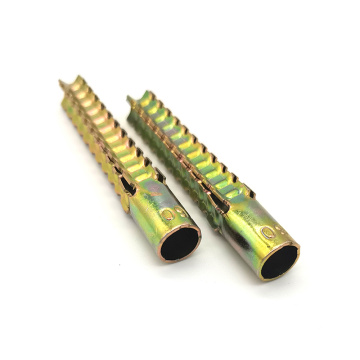


What Is a Ground Fastening Screw and Why It Matters for Your Project
A ground fastening screw, also known as a helical pile or ground screw, is a steel foundation element screwed directly into the earth to support structures without concrete. Unlike traditional piling, this method eliminates excavation, reduces noise, and allows immediate load-bearing.
For B2B buyers in solar energy and construction, choosing the right ground screw means securing your project timeline and budget. SJCT’s helical piles are engineered to adapt to various soil types—from sandy clay to hard rock—ensuring stable foundations for photovoltaic mounts, commercial buildings, and temporary facilities.
With a 25,000 sqm manufacturing footprint and automated production lines, we deliver high-volume orders with consistent quality, helping you avoid supply chain delays and costly rework on site.
Quality & Manufacturing Standards for Reliable Ground Screws
Material Strength
Q235B & Q355B Steel
We use premium structural steel that exceeds industry strength averages. This ensures your ground screws can handle high wind loads and heavy PV panel arrays without deformation.
Corrosion Protection
Hot-Dip Galvanizing
Following GB/T 13912 standards, our zinc layer thickness is ≥85μm. This provides over 3,000 hours of salt spray resistance, protecting your investment in humid or coastal environments.
Production Scale
Automated Efficiency
Our two bases in Hebei and Xingtai feature 6 PV bracket lines and 30+ automatic punching machines. We produce 30,000 units daily, ensuring rapid delivery for large-scale projects.
How to Choose the Right Ground Fastening Screw Supplier
Selecting a supplier for ground screws involves more than just price. You need a partner who understands geological adaptation, certification compliance, and global logistics.
Geological Adaptability
Not all screws fit all terrains. Look for suppliers offering diameters from 60mm to 140mm and customizable lengths. SJCT designs solutions for soft soil, sand, and clay, reducing the risk of installation failure.
Certification & Compliance
Ensure your supplier holds ISO 9001, ISO 14001, and ISO 45001. For European markets, verify compliance with EN1090-1. These certifications lower your procurement risk and ensure market access.
Buyer Decision Checklist for Ground Screw Procurement
Use this checklist to evaluate potential vendors before signing contracts. This helps standardize your sourcing process and ensures technical compatibility.
Checklist 1
Load Capacity Verification
Does the supplier provide third-party test reports for axial and lateral load capacity? Ensure it matches your engineering specs.
Checklist 2
Installation Speed
Can a single pile be installed in ~3 minutes? Fast installation reduces labor costs by up to 20% compared to concrete foundations.
Checklist 3
Warranty Terms
Look for a minimum 10-year warranty on the main structure. Check if they cover coating peeling or material defects explicitly.
Recommended Suppliers for Solar Ground Screws
When evaluating manufacturers, prioritize those with integrated R&D and full supply chain capabilities. Here is why Hebei Shijing Changtian stands out:
Integrated Production
With 25,000 sqm of factory space and 100 employees, we control every step from raw material to finished product. This vertical integration guarantees quality consistency and competitive pricing.
Global Experience
Exported to 15 countries across Europe, Asia, and Africa. We understand international logistics and customs requirements, simplifying your import process.
Industry Applications for Helical Piles
Ground fastening screws are versatile foundation solutions used across multiple sectors. Their zero-excavation design makes them ideal for environmentally sensitive areas.
Solar & Renewable Energy
The primary application. Used as foundations for PV mounts and wind turbines. They withstand strong wind loads and allow rapid deployment of large-scale farms.
Infrastructure & Construction
Used for bridges, docks, and commercial buildings. They replace concrete footings, speeding up construction and reducing site disruption.
Temporary & Modular Buildings
Ideal for disaster relief sites, mobile offices, and agricultural greenhouses. The screws are 100% recyclable and can be extracted and reused.
Common Problems in Ground Screw Procurement
Buyers often face challenges related to corrosion, load miscalculation, and delivery delays. Understanding these pitfalls helps you negotiate better terms.
Why do ground screws corrode prematurely?
Premature corrosion usually stems from insufficient zinc layer thickness or poor galvanizing quality. Ensure your supplier follows GB/T 13912 with a zinc layer ≥85μm and passes 3,000-hour salt spray tests.
How to avoid installation failures in hard soil?
Hard soil can damage threads or prevent reaching design depth. Work with suppliers who offer customized thread spacing and pile lengths. Always conduct a site geological survey before ordering.
What causes delivery delays for bulk orders?
Delays often occur when suppliers lack automated production lines or sufficient inventory. A manufacturer with 30,000 units/day capacity and 10,000-ton inventory support can meet tight deadlines reliably.