

Send Message
Privacy statement: Your privacy is very important to Us. Our company promises not to disclose your personal information to any external company with out your explicit permission.

EN


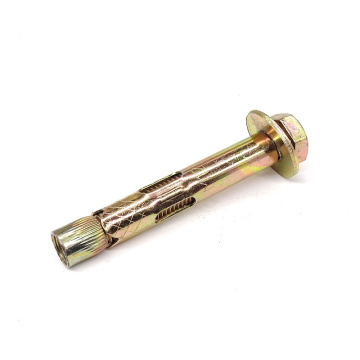

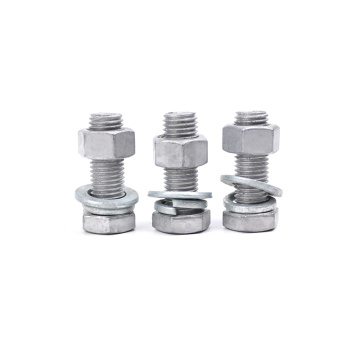


An EPDM washer is a critical sealing component made from Ethylene Propylene Diene Monomer rubber, designed to prevent leaks in mechanical and construction assemblies. These washers act as a durable barrier between two surfaces, absorbing vibration and compensating for minor irregularities in bolted joints.
The primary role of an EPDM washer is to create a watertight and airtight seal under pressure. Unlike standard metal or plastic washers, the rubber composition allows it to deform slightly to fill gaps, ensuring that moisture, dust, and corrosive elements cannot penetrate the joint.
EPDM rubber is renowned for its exceptional resistance to weathering, ozone, UV radiation, and extreme temperatures ranging from -40°C to +120°C. This makes EPDM washers ideal for outdoor applications, roofing systems, and industrial machinery exposed to harsh environmental conditions.
High-quality EPDM washers are not just about material selection; they require precision manufacturing to ensure consistent performance. Our production process adheres to strict international standards, utilizing advanced molding techniques and rigorous quality control measures.
We utilize high-pressure compression molding to ensure that each EPDM washer maintains exact dimensional tolerances. This process eliminates voids and inconsistencies, providing a uniform density that enhances sealing performance and longevity.
Every batch of EPDM washers undergoes comprehensive testing, including tensile strength analysis, compression set tests, and accelerated aging simulations. This ensures that our products meet or exceed industry specifications for durability and reliability.
Selecting the correct EPDM washer involves more than matching the size. Buyers must consider material grade, hardness, chemical compatibility, and environmental exposure to ensure optimal performance and cost-effectiveness.
Standard EPDM offers excellent weather resistance, while premium grades provide enhanced protection against ozone and steam. For applications involving oils or fuels, consider alternative materials like Nitrile, but for general water and atmospheric exposure, EPDM remains the superior choice due to its balance of flexibility and durability.
The hardness of an EPDM washer, measured on the Shore A scale, affects its sealing capability and load distribution. Softer washers (40-50 Shore A) conform better to irregular surfaces, while harder washers (60-70 Shore A) provide greater structural support and resistance to extrusion under high pressure.
Ensure that the inner and outer diameters, as well as the thickness, match your specific fastening requirements. Even minor deviations can lead to improper seating or inadequate sealing. Request detailed dimension reports from your supplier to verify compliance with your engineering drawings.
Use this checklist to evaluate potential suppliers and ensure you are sourcing high-quality EPDM washers that meet your project's technical and commercial requirements.
Material Certification: Does the supplier provide proof of raw material origin and EPDM compound certification?
Testing Reports: Are third-party test reports available for tensile strength, compression set, and aging resistance?
Customization Capability: Can the manufacturer produce custom sizes, shapes, and durometers according to your specs?
Production Capacity: Does the supplier have the capacity to handle your order volume and meet tight deadlines?
Quality Control Process: Is there a documented QC process with regular inspections during production?
After-Sales Support: What is the warranty policy and return procedure for defective items?
When selecting a supplier for EPDM washers, prioritize partners who demonstrate technical expertise, manufacturing scale, and a commitment to quality. Here are key factors to consider when evaluating potential suppliers.
Look for suppliers with in-house molding capabilities and extensive experience in rubber compounding. This ensures they can troubleshoot issues quickly and maintain consistent quality across large orders.
Ensure your supplier adheres to international standards such as ISO 9001 for quality management. Additionally, check for compliance with REACH and RoHS regulations if exporting to Europe or other regulated markets.
Choose a supplier with proven scalability to handle both small prototype runs and large-scale production. Reliable logistics partnerships and inventory management systems are also crucial for timely delivery.
EPDM washers are versatile components used across various industries where reliable sealing and vibration dampening are essential. Their resistance to environmental factors makes them indispensable in many critical applications.
In roofing systems, EPDM washers are used with metal screws to seal penetrations in membranes and metal panels. They prevent water ingress and protect the structure from leaks, while their UV resistance ensures long-term performance without degradation.
Used in automotive assembly for sealing lights, trim, and fluid lines. EPDM washers absorb road vibrations and withstand temperature fluctuations, ensuring quiet operation and preventing fluid leaks in challenging environments.
In HVAC systems, EPDM washers seal connections in ductwork and piping. Their resistance to moisture and chemicals prevents corrosion and leakage, contributing to system efficiency and reducing maintenance costs.
Solar mounting systems rely on EPDM washers to secure rails and panels to roofs or ground mounts. The washers provide a waterproof seal around fasteners, protecting the roof membrane and ensuring the stability of the solar array over decades of exposure.
Get answers to common questions about EPDM washer specifications, installation, and maintenance to make informed procurement decisions.
Standard EPDM washers can typically withstand continuous operating temperatures up to 120°C (248°F). Short-term peaks may reach slightly higher temperatures, but prolonged exposure above 120°C can accelerate aging. For applications exceeding this range, consider silicone or FKM alternatives.
Yes, EPDM is generally considered safe for contact with potable water. Many EPDM compounds are certified compliant with NSF/ANSI Standard 61 for drinking water system components. Always verify specific product certifications if your application requires strict regulatory compliance.
The appropriate hardness depends on the sealing force required and the surface irregularities. Softer washers (40-50 Shore A) are better for uneven surfaces and low clamping force, while harder washers (60-70 Shore A) offer better extrusion resistance and structural support for higher loads.
Under normal conditions, EPDM washers can last 10-20 years or more. Their lifespan is significantly extended by their resistance to UV light, ozone, and weathering. However, exposure to oils, fats, and certain solvents can degrade EPDM, reducing its effective service life.
Absolutely. EPDM is one of the best rubber materials for outdoor applications due to its exceptional resistance to sunlight (UV), ozone, and rain. It does not crack or become brittle easily, making it ideal for exterior construction, automotive, and industrial uses.


Privacy statement: Your privacy is very important to Us. Our company promises not to disclose your personal information to any external company with out your explicit permission.
Fill in more information so that we can get in touch with you faster
Privacy statement: Your privacy is very important to Us. Our company promises not to disclose your personal information to any external company with out your explicit permission.